
From Longing to Presence
Happiness for BeginnersThe story’s conflicts repeatedly ask Helen whether wanting an ideal future prevents her from valuing the imperfect life she is already living.
increasing Bearing strength in each event
 decreasing
Bearing strength in each eventdecreasingThe Fantasy of Transformation

The Fantasy of Transformation
An ideal self imagined
Helen expects the wilderness to make her brave, awesome, and untouchable. She has organized her hope around a future version of herself who will no longer feel fragile.
Because the image is so demanding, the ordinary realities of the trip—dirty clothes, blisters, and fear—feel like evidence that she has chosen wrongly. Her fantasy clashes with a wilderness that offers no easy redemption.
Growth without erasure
The story will test whether Helen can change without pretending her existing self must disappear. The conflict is between becoming stronger and refusing to accept herself until she has transformed.
The Old Game of Pursuit
The Old Game of Pursuit
A pattern recognized
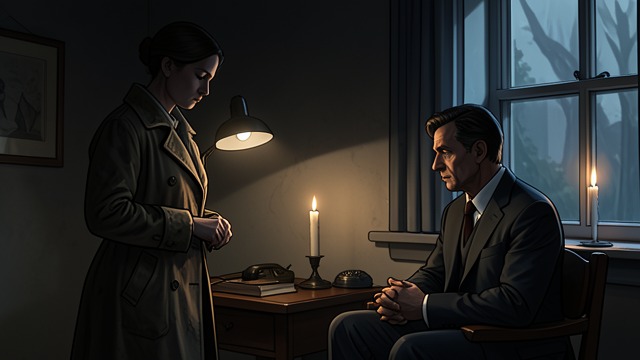
After Jake stops, Helen interprets his withdrawal through her marriage to Mike. Mike’s alternating pursuit and distance taught her to keep running in order to remain wanted.
She now suspects that Jake follows the same pattern, even though she lacks the information that could explain his fear and illness. Her past becomes a lens that may help her notice danger but may also distort the present.
Risk of repetition
The conflict is not whether Helen should ignore her experience. It is whether she can distinguish a new person from an old relationship before deciding what is happening.
The Group’s Romantic Story
The Group’s Romantic Story
Other people decide the ending
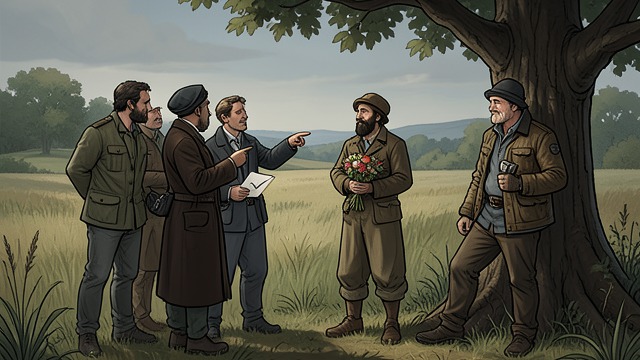
Participants imagine that Jake and Windy will marry, treating shared interests and an apparent kiss as proof of an inevitable match. Helen hears their speculation and begins to treat it as fact.
The imagined wedding takes over moments Helen had hoped to enjoy in Painted Meadow. Her pain grows not only from Jake’s silence, but from a future constructed by people around them.
Projection and truth
The group’s story reveals how easily visible resemblance becomes assumed intimacy. Jake and Windy must eventually speak for themselves rather than live inside the romance others have assigned them.
The Choice to Leave the Floor

The Choice to Leave the Floor
The expected ending fails
Helen watches Jake and Windy celebrated onstage and leaves the banquet feeling overlooked and heartbroken. She cannot make the award or the romantic situation resolve the way she hoped.
She considers the certificate she did not receive and the future she imagined with Jake. The loss brings back the isolation she had hoped the course would end.
A necessary pause
Walking away does not mean that Helen has failed to grow. It gives her room to acknowledge disappointment instead of forcing herself to perform happiness for everyone else.
Presence in the Elevator

Presence in the Elevator
A choice made now
Trapped in the elevator, Helen and Jake exchange the truths each has withheld. The physical danger sharpens the moment, but the important change is that they stop relying on assumptions.
Helen turns off Mike’s call and tells Jake she loves him. She is no longer trying to obtain a guaranteed future before choosing to be present with another person.
Hope without a guarantee
Jake’s vision will continue to decline, and their life together will bring hardship. Their confession accepts that uncertainty rather than waiting for a perfect, risk-free moment.
Before Helen leaves for Wyoming
The motel night after Mike’s call
The days before the summer-solstice party
After the certificate ceremony
The night Jake returns
